Size Chart Template for Clothing Brands: Cut Size Returns and Sell More Online (With a Copy-Paste Guide)
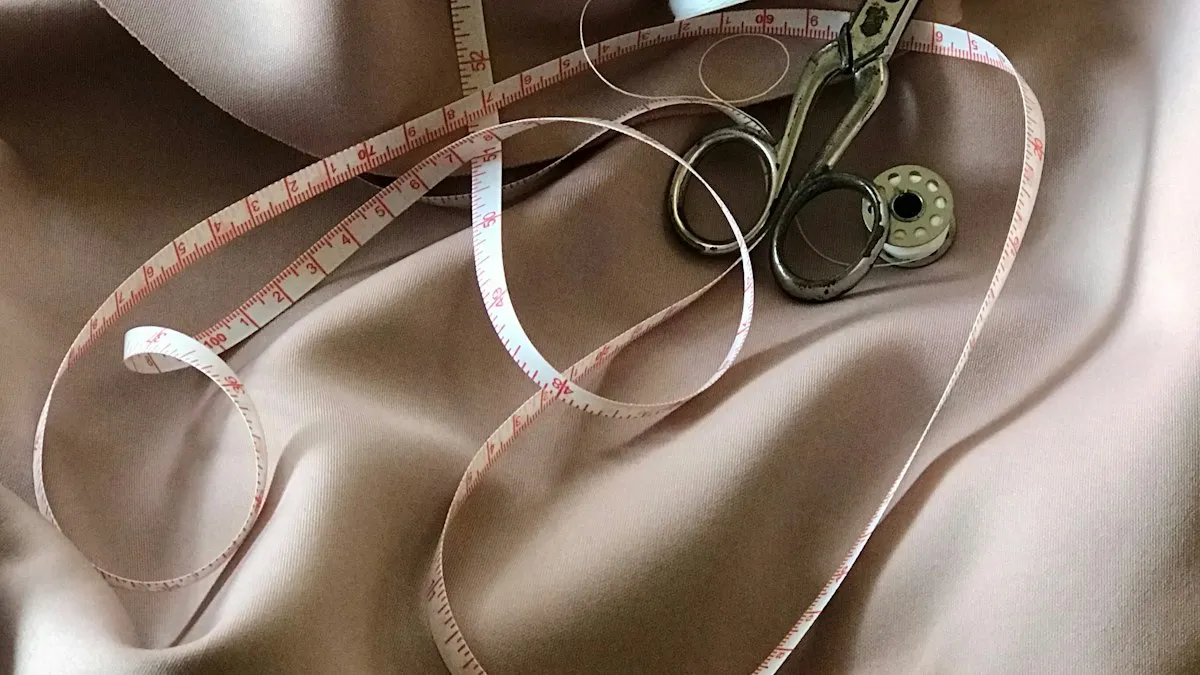
Short answer
A good size chart tells the shopper exactly how the garment will fit their body before they buy. It shows body measurements and garment measurements in centimetres and inches, conventional sizes (S, M, L) and numeric sizes, international conversions, how to measure yourself, the model's height and size, and a short fit note per product ("relaxed fit, size down if between sizes"). Put the link right next to the size selector. Baymard Institute's apparel research found that 83% of desktop and 87% of mobile apparel sites did not give sufficient sizing information, and that sizing uncertainty was a common reason for abandoning a product in testing. Fixing it is one of the cheapest ways a fashion brand can raise conversion and cut returns. Husbar builds product pages and fit content for fashion and luxury brands.
Key takeaways
- ✓Show garment measurements, not only a generic body chart.
- ✓Add the model's height and the size they wear on every product.
- ✓Write one-line fit notes per product: true to size, relaxed, size down.
- ✓Place the size guide link next to the size selector, on mobile too.
What to include in your size guide
| Element | Why shoppers need it | Example |
|---|---|---|
| Conventional sizes | Most shoppers think in S, M, L | XS to XXL |
| Numeric sizes | Some shoppers know their UK, EU or US number | UK 8, EU 36, US 4 |
| Body measurements in cm and inches | Shoppers measure themselves at home | Bust 86 cm / 34 in |
| Garment measurements | Shows how much room the piece has | Abaya length 140 cm, sleeve 60 cm |
| How to measure | Avoids measuring in the wrong place | Diagram of bust, waist, hip, length |
| Model information | A real reference body | Model is 170 cm and wears S |
| Fit note | Explains the cut | Oversized: size down for a closer fit |
| Link to help | Some shoppers still want advice | Ask our stylist on chat |
Why sizing decides fashion sales online
Uncertainty kills the add to cart
In a store, a shopper tries the piece on. Online, the size guide is the fitting room. Baymard's research describes users leaving the site to look for sizing details elsewhere and abandoning products when they cannot work out their size. Every unanswered sizing question is a lost sale or a likely return.
Bracketing is a symptom
When shoppers are unsure, some order two sizes and return one. That doubles shipping and handling for a single sale. Clear fit information gives the shopper the confidence to order once.
Modest wear and abayas need different measurements
For abayas, kaftans and jalabiyas, length and sleeve length often matter more than bust or waist. Shoppers want to know the length from shoulder to hem and how it falls on different heights. A chart built for fitted western wear does not answer their question.
Fit notes carry the brand voice
A short note in your own voice, such as "cut for a relaxed drape, choose your usual size", feels like advice from a shop assistant. It also lets you sell the feeling of the garment, not just the numbers.
How to build a size chart that works
- Pick one base size and measure your actual samples flat, not the pattern specs.
- Record garment measurements per size: chest, waist, hip, length, sleeve, shoulder, and for abayas, shoulder-to-hem length.
- Create a body chart that maps each size to body measurements, in cm and inches.
- Add UK, EU and US conversions if you sell to tourists or ship abroad.
- Write a how-to-measure guide with a simple diagram.
- Add model height and size worn to every product page and photo set.
- Write a fit note per product: true to size, relaxed, slim or oversized.
- Put the size guide link beside the size selector and make it close back to the product.
- Review return reasons every month and update notes where "too small" or "too big" keeps appearing.
Want this applied to your brand?
We will find the psychology behind your lost sales and show you what to fix first.
Book a Growth AuditThe treasure: a copy-paste size guide template
- Headline: "Find your size in 60 seconds".
- Step 1 text: "Measure your bust at the fullest point, your waist at the narrowest point and your hips at the widest point. Keep the tape level and snug, not tight."
- Step 2 text: "Match your measurements to the body chart below. If you are between sizes, see the fit note for this piece."
- Body chart columns: Size | UK | EU | US | Bust cm/in | Waist cm/in | Hip cm/in.
- Garment chart columns: Size | Chest width | Length (shoulder to hem) | Sleeve | Shoulder.
- Fit note line: "This piece has a [relaxed/regular/slim] fit. [Choose your usual size / size down for a closer fit / size up if you prefer room]."
- Model line: "Our model is [height] cm and wears size [size]."
- Length guide for abayas and long dresses: "If you are [height range], we suggest length [X]. Wear with heels? Choose the longer length."
- Fabric line: "Fabric: [composition]. Stretch: [none/slight/high]."
- Help line: "Still unsure? Send us your height and usual size on chat and our team will suggest the best fit."
- Exchange line: "Wrong size? Exchange within [X] days under our exchange policy."
A worked example
Imagine a Dubai abaya label selling online in three lengths. Its returns form showed that the most common reason was "too long" or "too short", not the width. The brand measured every style from shoulder to hem, added a height-to-length guide, photographed two models of different heights wearing the same piece and wrote a one-line fit note per style. It also moved the size guide link from the bottom of the page to beside the size buttons on mobile. The team then tracked returns by reason each month. The lesson: the right measurement for your category matters more than a long generic chart.
Want Husbar to do this for you?
Husbar can rebuild your product pages with fit information, size guides, better photos and reviews that mention fit, then run campaigns to the products that convert best. Book a free Growth Audit or try our free 60-second website audit to see what is holding your store back.
Use reviews to prove the fit
Ask buyers a simple follow-up: "How did the size fit? Small, true to size or large?" Show the summary on the product page. Real fit feedback from other shoppers is more convincing than any chart, and it helps you spot pieces whose fit note needs changing.
Photograph fit, not just style
Add one photo per product that shows the fit clearly: a side view for drape, a back view for length and a close-up of the cuff or hem. For modest wear, show how the piece moves when walking. These images answer sizing questions that text cannot.
Give your chat team a fit script
When a shopper asks "which size?", the reply should ask for height, usual size and preferred fit, then suggest one size with a reason. Save the answers: they become new fit notes and product page improvements.
How Husbar helps
Husbar builds fashion product pages that sell: fit content, size guides, model information, photography direction, reviews that mention fit, and campaigns that send the right shoppers to the right products. Our fashion and luxury marketing team can take this on end to end, or support your team. book a free Growth Audit.
Questions to ask before you start
- Do we measure finished garments or only use pattern specs?
- Which return reason is most common for each product?
- Does every product show model height and size?
- Can shoppers find the size guide on mobile without scrolling?
- Do our fit notes match what customers say in reviews?
Key terms
- Body measurements: the shopper's bust, waist and hip.
- Garment measurements: the actual size of the finished piece.
- Ease: the extra room between body and garment.
- Bracketing: ordering several sizes and returning the rest.
- Fit note: a short line explaining how a piece fits compared with usual sizing.
Mistakes to avoid
- Copying a generic chart from another brand.
- Showing only S, M, L with no measurements.
- Hiding the size guide at the bottom of the page.
- Using inches only for a UAE audience that often thinks in centimetres.
- Never updating the chart after a new factory or fabric.
Why fashion brands win on identity, not discounts
Shoppers rarely buy fashion because they need another item. They buy because a piece says something about who they are or want to be. Boutiques and brands that build a clear identity, show real styling and treat customers personally earn loyalty that discounts never buy.
Related reading: return and exchange policy template for fashion brands, fashion e-commerce conversion tips and reduce online returns in the UAE.
For children's sizes by age and height, see Kidswear Brand Marketing in the UAE.
Should a size chart show body or garment measurements?+
Both if you can. Body measurements help shoppers choose a size; garment measurements show how the piece will actually fit and how much room it has.
Do I need centimetres and inches?+
Yes for a UAE and GCC audience. Many shoppers measure in centimetres, while some international and tourist shoppers think in inches.
How do I size abayas and long dresses?+
Lead with length from shoulder to hem and sleeve length, add a height-to-length guide, and show models of different heights.
Where should the size guide link go?+
Right next to the size selector, on desktop and mobile, opening in a layer that closes back to the product page.
How do I know if my size chart is working?+
Track return reasons and size-related questions on chat. If "too small" keeps appearing for one style, update its fit note or measurements.
Does Husbar work with fashion boutiques and brands in the UAE?+
Yes. Husbar's fashion and luxury marketing service covers brand positioning, content, Instagram and TikTok, paid ads, e-commerce and retail partnerships.
Can Husbar help a boutique sell online?+
Yes. We build and run online sales for boutiques, from product content and ads to WhatsApp ordering and email flows.
Sources
- [Baymard Institute: Apparel, 10 best practices on sizing (Jul 6, 2022)](https://baymard.com/research-articles/apparel-size-information)
- [Baymard Institute: e-commerce UX research](https://baymard.com/research)
- [Google Search Central: product structured data](https://developers.google.com/search/docs/appearance/structured-data/product)
- [Google: prohibited and restricted content for reviews](https://support.google.com/contributionpolicy/answer/7400114)
Team Husbar
Husbar Editorial
Team Husbar is the strategy, psychology and research team at Husbar, a psychology-led growth agency headquartered in Dubai. Together we have worked with 100+ brands over 10+ years.
Want this applied to your brand?
We will find the psychology behind your lost sales and show you what to fix first.
Book a Growth AuditKeep reading
Fashion Marketing
Meta Catalog Ads for Fashion Brands: How to Set Up Advantage+ Catalog Ads That Actually Sell
Fashion Marketing
Kidswear Brand Marketing in the UAE: How Children's Clothing Brands Win Parents and Sell More Online
Fashion Marketing
Return and Exchange Policy Template for Fashion, Jewellery and Beauty Brands in the UAE (Copy-Paste Wording That Builds Trust)