Supermarket Trade Terms in the UAE: Rebates, Promo Fees and Trade Spend Explained (With a Worked Margin Calculator)
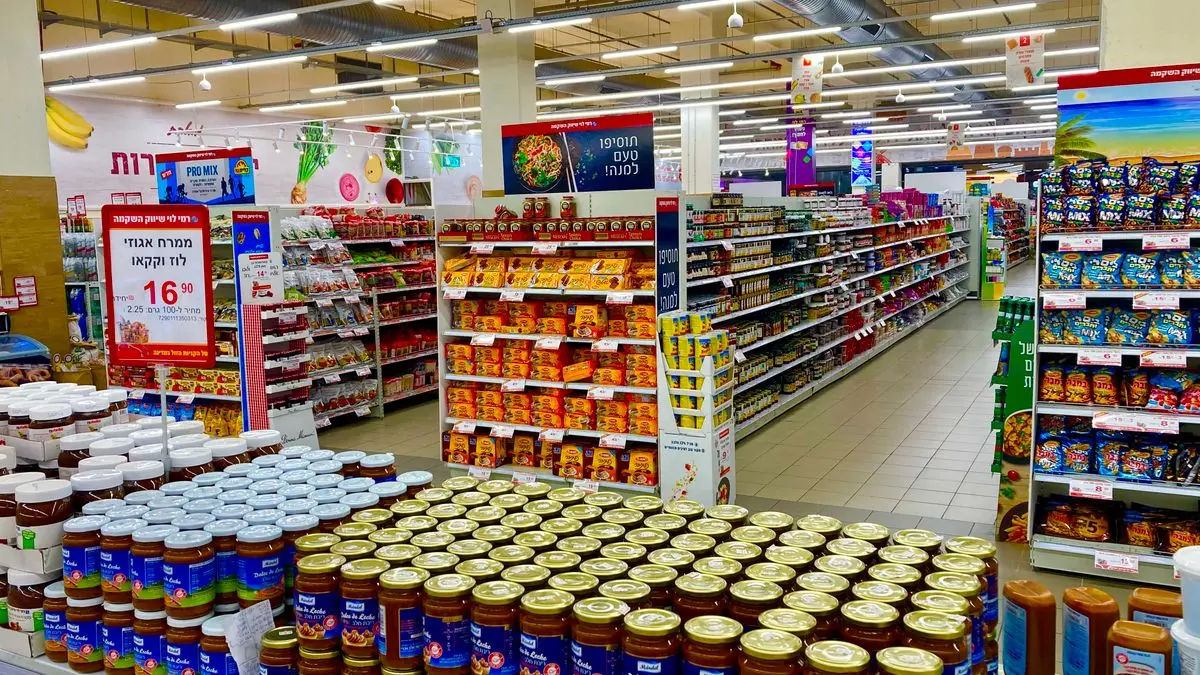
Short answer
Supermarket trade terms are the commercial conditions a retailer asks a supplier to accept in return for shelf space: the margin the store keeps, listing or new-line fees, annual rebates, promotional and display fees, marketing contributions, payment terms and the rules for returns and expired stock. Together these costs are often called trade spend. In the UAE, as in most markets, terms differ by retailer, category and how badly the store wants your product, so they are negotiated rather than fixed. Brands that win work out their true net price per unit after every deduction before they sign, then negotiate for terms they can afford and promotions that actually move stock. Husbar helps FMCG brands plan retail entry, trade marketing and in-store activation.
Key takeaways
- ✓Trade terms are negotiated, not published: every retailer and category is different.
- ✓Calculate your net price after every deduction before agreeing to anything.
- ✓Payment terms affect cash flow as much as rebates affect margin.
- ✓Trade spend only pays back when shoppers know and want the product.
Common supermarket trade terms and what they cost you
| Term | What it means | How it hits you | What to negotiate |
|---|---|---|---|
| Retailer margin | The difference between your selling price to the store and the shelf price | Sets your base price | Agree the shelf price strategy together |
| Listing or new-line fee | A one-off payment to add each product code | Up-front cash before any sales | Fewer SKUs, phased listing, fee linked to stores |
| Annual or growth rebate | A percentage of purchases paid back to the retailer | Reduces net price on every unit | Tie rebates to growth targets |
| Promotional support | Funding for price cuts, leaflets and offers | Margin given away during promotions | Plan a promo calendar you can afford |
| Display and gondola end fees | Payments for extra space or prime positions | Fixed cost per period | Pay only for positions with proven footfall |
| Payment terms | How many days after delivery you are paid | Ties up cash | Shorter terms or early-payment discount |
| Returns and expiry | Who pays for damaged, unsold or expired goods | Hidden write-offs | Clear limits and shelf-life rules |
What every founder should understand before the buyer meeting
The buyer is judging category profit, not your story
A supermarket buyer has limited shelf space and targets for the whole category. They want to know why your product will bring new shoppers or more profit per metre than what it replaces. A clear sales plan and marketing support matter more than a long brand presentation.
Net price is the only number that matters
Your invoice price minus rebates, promotional funding, fees spread across expected volume and the cost of returns gives your real net price. Many first-time brands only look at the invoice price and discover months later that they are losing money on every unit.
Cash flow can sink a profitable listing
If you pay for stock and listing fees now and receive payment many weeks after delivery, a fast-growing listing can drain cash. Model your payment terms alongside production lead times before you agree to a national roll-out.
Trade spend without shopper demand is wasted
A gondola end and a price cut help when shoppers already recognise your brand. Without awareness, sampling or social content, promotions just give margin away. Plan consumer marketing alongside trade terms.
How to prepare and negotiate trade terms in 8 steps
- List every cost the retailer may ask for (use the table above as a checklist).
- Calculate your net price per unit at three volume levels: low, expected and high.
- Decide your walk-away point: the lowest net price that still covers costs and a fair profit.
- Start with fewer SKUs and fewer stores to limit listing fees and prove sales.
- Offer growth-linked rebates instead of flat rebates where possible.
- Build a 6 to 12 month promotion calendar you can fund, tied to seasons such as Ramadan.
- Agree in writing how returns, damages and near-expiry stock are handled.
- Present a consumer marketing plan (sampling, social, retail media) that drives shoppers to the shelf.
Want this applied to your brand?
We will find the psychology behind your lost sales and show you what to fix first.
Book a Growth AuditThe treasure: a trade terms margin calculator you can copy into a spreadsheet
- Row 1, Recommended shelf price (incl. VAT): [A]. Row 2, Shelf price excluding 5% UAE VAT: A / 1.05 = [B].
- Row 3, Retailer margin %: [C]. Row 4, Your invoice price to retailer: B x (1 - C) = [D].
- Row 5, Annual rebate %: [E]. Row 6, Rebate cost per unit: D x E = [F].
- Row 7, Promotional funding per unit (average across the year): [G].
- Row 8, Listing and display fees for the year: [H]. Row 9, Expected units sold in the year: [I]. Row 10, Fees per unit: H / I = [J].
- Row 11, Returns and expiry allowance per unit: [K].
- Row 12, Net price per unit: D - F - G - J - K = [L].
- Row 13, Your landed or production cost per unit plus distribution: [M]. Row 14, Profit per unit: L - M. Row 15, Profit margin on net price: (L - M) / L.
- Illustrative example only: shelf price AED 21.00, ex-VAT AED 20.00, retailer margin 30% gives invoice AED 14.00; a 5% rebate costs AED 0.70; promo funding averages AED 0.80; AED 12,000 of fees over 20,000 units is AED 0.60; returns allowance AED 0.30. Net price = AED 11.60. If your cost is AED 9.50, profit is AED 2.10 per unit, not the AED 4.50 the invoice suggested.
A worked example
Imagine a Dubai healthy-snacks brand invited to list five flavours in a hypermarket chain. The founder plans to say yes to everything. Before the meeting, the team fills in the calculator above and sees that five SKUs with full listing fees and a flat rebate leave almost no profit at expected volumes. They return with a counter-proposal: three best-selling flavours, a growth-linked rebate, a Ramadan promotion they can fund and an in-store sampling programme to drive trial. The buyer agrees to a smaller listing with a review after six months, and the brand protects its cash while it proves sell-out.
Want Husbar to do this for you?
Husbar can prepare your buyer presentation, model your trade terms, plan your promotion calendar and run the in-store and online marketing that drives sell-out. Book a free Growth Audit or a free Google Meet consultation at /contact and we will review your retail plan before your next buyer meeting.
Joint business plans with retailers
Once your product is listed and selling, ask the buyer for a joint business plan: shared annual targets, agreed promotions, display opportunities and how rebates change if you hit growth goals. This turns a one-sided negotiation into a partnership and gives you a reason to ask for better positions as you grow.
Trade marketing that earns its cost
Not every fee is bad. Paid displays, leaflets and retail media can pay back when they reach shoppers at the moment of choice. Measure each activity by the extra units sold during and after the period compared with normal weeks. Keep the ones that grow sell-out and drop the ones that only move stock forward.
Distributor or direct?
Many brands enter UAE supermarkets through a distributor who handles logistics, merchandising and credit. The distributor takes a margin too, so add it to your calculator. In return you may get better access, faster payment and in-store support. Compare both routes on net profit per unit and cash flow, not just headline price.
How Husbar helps
Husbar helps FMCG and food brands get into and grow in UAE supermarkets: buyer presentations, trade marketing plans, shopper and in-store activation, sampling, retail media and the consumer campaigns that make shelf space pay back. Our retail marketing team can take this on end to end, or support your team. book a free Growth Audit.
Questions to ask before you start
- What is our net price per unit after every deduction?
- How many SKUs do we really need at launch?
- Which promotions can we afford over the next 12 months?
- How long can our cash cover payment terms?
- What will drive shoppers to the shelf in the first 90 days?
Key terms
- Trade terms: the commercial conditions agreed between supplier and retailer.
- Trade spend: the total money a brand spends with retailers on fees, rebates and promotions.
- Rebate: a percentage of purchases paid back to the retailer.
- Sell-in: stock sold to the retailer. Sell-out: stock bought by shoppers.
- Gondola end: the display at the end of an aisle.
Mistakes to avoid
- Agreeing terms without calculating net price.
- Listing too many SKUs at once.
- Flat rebates with no growth condition.
- Promotions with no consumer marketing behind them.
- Ignoring payment terms in the cash flow plan.
Why retail growth needs both footfall and online demand
Most shoppers now research online before they buy, even when they buy in store. Retailers that combine local search visibility, social proof, strong in-store experience and online ordering capture customers at every step instead of hoping they walk past.
Related reading: supermarket listing fees in the UAE, how to get products into supermarkets in the UAE, retail pricing and margins and in-store promotion ideas that sell.
What are trade terms in retail?+
Trade terms are the conditions a retailer and supplier agree: margins, fees, rebates, promotional funding, payment terms and returns rules.
Are supermarket trade terms fixed in the UAE?+
No. They vary by retailer, category, brand strength and volume, and are negotiated. Always get the full list in writing before you agree.
How do I calculate my net price to a supermarket?+
Start with your invoice price and subtract rebates, average promotional funding, fees divided by expected units and a returns allowance. Compare the result with your full cost per unit.
Should a small brand pay listing fees?+
Sometimes, but limit the risk: list fewer products in fewer stores first, link fees to stores or performance where possible and make sure you have a marketing plan to drive sales.
What is the difference between sell-in and sell-out?+
Sell-in is what you sell to the retailer. Sell-out is what shoppers buy from the shelf. Retailers keep products that sell out, so plan marketing for sell-out.
Does Husbar work with retailers and distributors?+
Yes. Husbar's retail marketing service helps stores, brands and distributors grow sales in store and online, and get products into more retailers.
Can Husbar help us get into more stores?+
Yes. We support retail listings, distributor partnerships, trade marketing and in-store activation across the UAE and Saudi Arabia.
Sources
- [UAE Ministry of Economy](https://www.moec.gov.ae/en/)
- [GS1 GCC: adopting GS1 standards in the UAE](https://gcc.gs1eg.org/?p=37749)
- [Ehrenberg-Bass Institute for Marketing Science](https://marketingscience.info/)
- [Chandon et al., eye-tracking study of shelf attention (INSEAD)](https://flora.insead.edu/fichiersti_wp/inseadwp2008/2008-51.pdf)
Team Husbar
Husbar Editorial
Team Husbar is the strategy, psychology and research team at Husbar, a psychology-led growth agency headquartered in Dubai. Together we have worked with 100+ brands over 10+ years.
Want this applied to your brand?
We will find the psychology behind your lost sales and show you what to fix first.
Book a Growth AuditKeep reading

Retail Marketing
Dubai 3 Day Super Sale 2026 (27 November to 3 December): What Retailers and Online Stores Should Do This Week

Retail Marketing
Retail Marketing Agency in Dubai: What They Do and When You Need One

Retail Marketing
Quick Commerce in the UAE: How FMCG Brands Get Listed and Sell on talabat mart, noon Minutes and Careem Quik