Priming in Marketing: Real Research and Examples for Ads, Websites and Stores
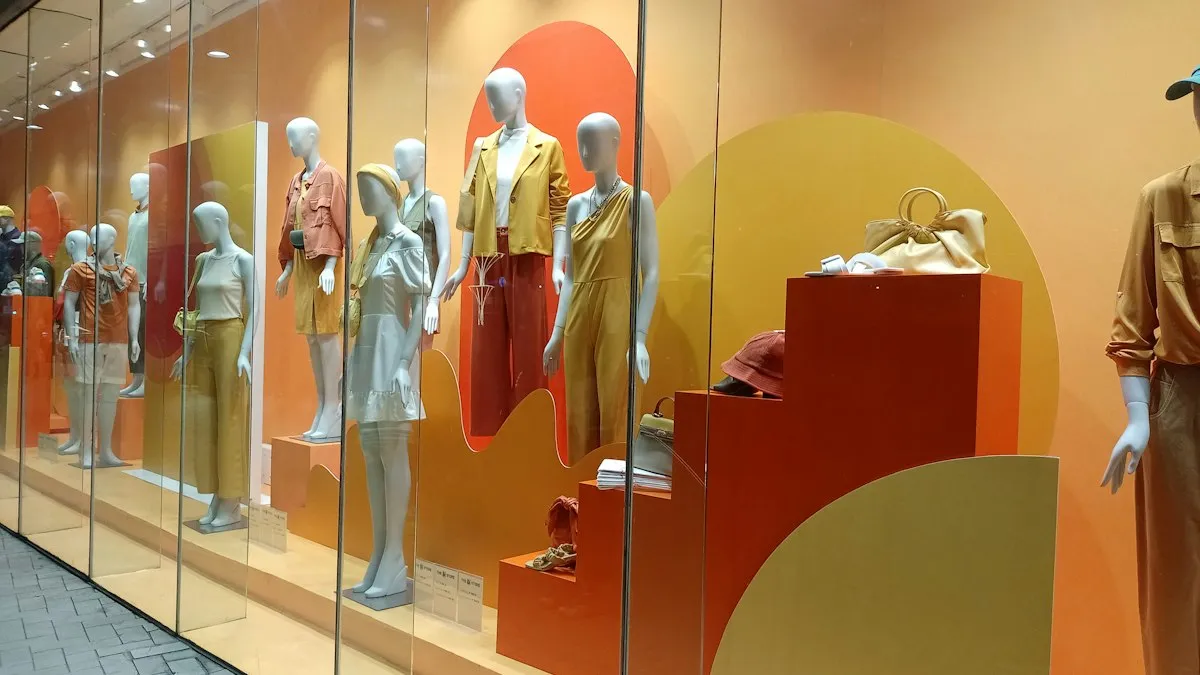
Short answer
Priming in marketing is the effect where something a person sees, hears or reads first changes how they notice and judge what comes next. A classic study by Mandel and Johnson found that the background image of a web page (for example clouds suggesting comfort or coins suggesting price) shifted which product attributes shoppers paid attention to and what they chose. Another, by North, Hargreaves and McKendrick, found French wine outsold German wine in a store when French music played, and the reverse with German music. Some famous social priming findings have failed to replicate, so the useful lesson is modest: context shapes attention. Use visuals, words and settings that make your strongest benefit the first thing people think about. Husbar builds psychology-led advertising and landing pages.
Key takeaways
- ✓Priming changes what people notice and weigh, not what they want.
- ✓Strong evidence exists for context effects on attention, such as page backgrounds and store music.
- ✓Some popular priming claims have not replicated: test, do not assume.
- ✓Prime the benefit that matters most to your buyer before showing the price.
Priming examples and how to apply them
| Context | Prime | What it can make more noticeable |
|---|---|---|
| Landing page hero | Imagery of comfort or durability | Quality and comfort attributes over price |
| Ad opening line | A word like "handcrafted" or "certified" | Craftsmanship or safety |
| Store music | Music linked to a country or mood | Products that fit that association |
| Packaging | Colours and textures suggesting freshness or luxury | Freshness or premium value |
| Sales conversation | Discussing the client's goals first | Value and outcomes over cost |
| Pricing page | Leading with the premium option | Higher reference point for value |
What the research shows
Visual primes on web pages
Mandel and Johnson ran experiments where people shopped for products such as cars and sofas on sites with different background wallpaper. A background suggesting money made price more salient; one suggesting comfort or safety made those attributes more salient, and choices shifted accordingly. Notably, the effect also appeared among people who knew a lot about the category.
Music in stores
In a supermarket study by North, Hargreaves and McKendrick, French and German wines were displayed together while French or German music played on alternate days. The wine matching the music outsold the other, and most shoppers did not report noticing the music influenced them.
Where priming is weaker
Some dramatic findings, such as people walking more slowly after reading words related to old age, were challenged when researchers including Doyen and colleagues could not reproduce them under controlled conditions. Treat bold priming claims with caution and rely on effects that are plausible and testable.
Why it matters for marketers
Shoppers rarely weigh every attribute. What is made salient first gets more weight. Choosing what your visitors see first, in a way that is honest, is one of the cheapest improvements you can make to ads and pages.
How to use priming in your marketing
- Decide the one attribute you want buyers to weigh most: quality, safety, comfort, status or speed.
- Choose a hero image that shows that attribute, not just the product.
- Open ads and pages with a line that names that benefit in the buyer's words.
- Show the price after the value has been framed, not as the first thing.
- Align packaging colours, textures and words with the attribute.
- In stores, align music, scent and lighting with the product story where it fits.
- Run A/B tests to see whether the prime changes clicks, add-to-cart or enquiries.
- Keep it honest: primes must match what the product truly delivers.
Want this applied to your brand?
We will find the psychology behind your lost sales and show you what to fix first.
Book a Growth AuditThe treasure: a copy-paste priming planner for your next campaign
- Step 1, the priority attribute: "Our buyer should think first about [quality / comfort / safety / status / speed / savings] because [reason from customer research]."
- Step 2, hero image brief: "Show [the outcome of the attribute, such as a relaxed family on the sofa], not only the product on white."
- Step 3, first line options (pick one to test): "[Benefit] that lasts for years." | "Made for [specific comfort or use]." | "Certified [safety standard] for peace of mind." | "Chosen by [type of customer] who [value]."
- Step 4, order of information on the page: benefit headline > outcome image > proof (reviews or certification) > product details > price > guarantee > call to action.
- Step 5, colour and texture: list three colours and one texture that signal the attribute (for example soft neutrals and fabric close-ups for comfort).
- Step 6, words to avoid: words that prime the wrong attribute, such as "cheap" on a premium page or "basic" on a quality message.
- Step 7, store or event setting (if relevant): music style, scent, lighting and display props that match the story.
- Step 8, A/B test plan: Version A = current page; Version B = new hero and first line; measure click-through, add-to-cart or enquiry rate over enough traffic to decide.
- Step 9, honesty check: "Does the product truly deliver the attribute we are priming? If not, change the prime."
- Example for a Dubai mattress brand: priority attribute = sleep quality; hero = a rested person in morning light; first line = "Wake up rested, even in Dubai summers"; price shown after reviews and trial terms.
A worked example
Picture a Dubai furniture e-commerce brand whose ads opened with a discount and a sofa on a white background. Shoppers compared on price. The brand tested a new version opening with a family relaxing on the sofa, a headline about comfort for long evenings at home and close-up images of fabric, with the price shown after reviews and the delivery promise. It ran the two versions as an A/B test. Whatever the result, the brand learned which attribute its buyers responded to and used that insight across packaging, showroom displays and email.
Want Husbar to do this for you?
Husbar can research what your buyers value, rewrite your ads and landing pages to frame it first, and run the A/B tests to prove what works. Book a free Growth Audit, or run our free 60-second website audit to see what your homepage primes today.
Priming in luxury retail
Luxury boutiques prime exclusivity and craftsmanship before a client sees a price: space around products, soft lighting, materials, music, a greeting and the story of how a piece was made. Online, the equivalent is generous white space, close-up craftsmanship images and storytelling before the price. Discount banners on a luxury page prime the opposite.
Priming in B2B sales
In B2B conversations, starting with the client's goals, risks and the cost of the problem makes value salient before the proposal and price arrive. Sending a short case summary before a pricing call does the same. Opening a meeting with your rates primes cost instead.
Cultural context in the UAE and GCC
Primes work through associations, and associations differ by audience. Imagery, colours, music and words that signal quality to one community may not to another. For UAE and Saudi audiences, test Arabic and English versions separately and use imagery that reflects the people and settings your buyers recognise.
How Husbar helps
Husbar applies consumer psychology to ads, landing pages, packaging and retail spaces: research into what buyers value, priming and framing tests, creative and copy, and measurement. Our psychology-led advertising team can take this on end to end, or support your team. book a free Growth Audit.
Questions to ask before you start
- Which attribute do our best customers value most?
- What do visitors see first on our ads and pages?
- Do our images show outcomes or only products?
- Does our order of information frame value before price?
- How will we test it?
Key terms
- Priming: when exposure to one stimulus influences response to a later one.
- Salience: how much something stands out or is noticed.
- Replication: repeating a study to check its results hold.
- A/B test: comparing two versions to see which performs better.
- Framing: how presenting information changes its interpretation.
Mistakes to avoid
- Believing every viral priming claim.
- Priming an attribute the product does not deliver.
- Leading with price on a premium offer.
- Changing many elements at once so you cannot learn.
- Not testing.
Why ads fail without psychology
Most ad accounts do not fail because of the platform. They fail because the message does not match what the buyer is feeling at that moment: the fear, the hope or the comparison going on in their head. When the hook, the offer and the landing page all speak to the same motive, the same budget buys more qualified leads and more sales.
Related reading: the framing effect in marketing, the halo effect and psychological pricing strategies.
What is priming in marketing?+
Priming is when something people see or hear first changes what they notice and how they judge what follows, such as a background image making comfort or price more salient.
Is priming manipulative?+
It can be if it misleads. Used honestly, it simply helps buyers notice benefits the product truly offers.
Does priming really work?+
Context effects on attention have support in research, such as studies on web page backgrounds and in-store music. Some dramatic social priming findings have not replicated, so test your own ideas.
How can I use priming on a landing page?+
Lead with an image and headline that show the attribute you want buyers to weigh most, and show the price after value has been framed.
Does Husbar manage Google, Meta and TikTok ads in the UAE?+
Yes. Husbar plans, builds and manages paid campaigns across Google, Meta, TikTok, Snapchat and LinkedIn for UAE and Saudi businesses, with Arabic and English creative.
How do I start working with Husbar?+
Book a free growth audit. We review your current ads, tracking and funnel, show you where the money is leaking and suggest a plan.
Sources
- [Mandel and Johnson (2002), When web pages influence choice: effects of visual primes on experts and novices, Journal of Consumer Research](https://doi.org/10.1086/341573)
- [North, Hargreaves and McKendrick (1999), The influence of in-store music on wine selections, Journal of Applied Psychology](https://doi.org/10.1037/0021-9010.84.2.271)
- [Doyen et al. (2012), Behavioral priming: it's all in the mind, but whose mind? PLOS ONE](https://doi.org/10.1371/journal.pone.0029081)
- [Kahneman, Thinking, Fast and Slow (overview)](https://en.wikipedia.org/wiki/Thinking,_Fast_and_Slow)
Team Husbar
Husbar Editorial
Team Husbar is the strategy, psychology and research team at Husbar, a psychology-led growth agency headquartered in Dubai. Together we have worked with 100+ brands over 10+ years.
Want this applied to your brand?
We will find the psychology behind your lost sales and show you what to fix first.
Book a Growth AuditKeep reading

Performance Marketing
The Mere Exposure Effect in Marketing: Why Customers Choose the Brand They Have Seen Before (Research, Examples and a Frequency Plan)

Performance Marketing
Meta Ads for Real Estate in Dubai: Cost Per Lead, Budgets and What Actually Works

Performance Marketing
Choice Overload in Marketing: When Too Many Options Kill Sales (and When They Do Not)